Brake bay, Greenville Drive
Brakes checked from pad to fluid
Pads, rotors, calipers, hoses and fluid, checked in depth. No hidden costs.
Chapter 01
Squeal, spongy pedal, longer stops
Brakes rarely fail all at once. They give you small notices first: a squeal at the stop sign, a pedal that travels a little farther than it used to, a car that takes more road to come to rest. Those are the three signs we hear about most at the counter on Greenville Drive, and each one points somewhere different.
Squeaky brakes usually mean the pads are wearing thin. A spongy pedal points at the hydraulic side, the fluid, the hoses or a caliper. Diminished stopping power can come from either, or from pads that have glazed over after a long stretch of light use. Telling these apart takes a look, not a guess.
If you are driving in from Appleton, Grand Chute, Kimberly or Fox Crossing and something about the pedal has changed, call us at (920) 734-6109 and tell us what you feel. That description is the first line on the ticket.
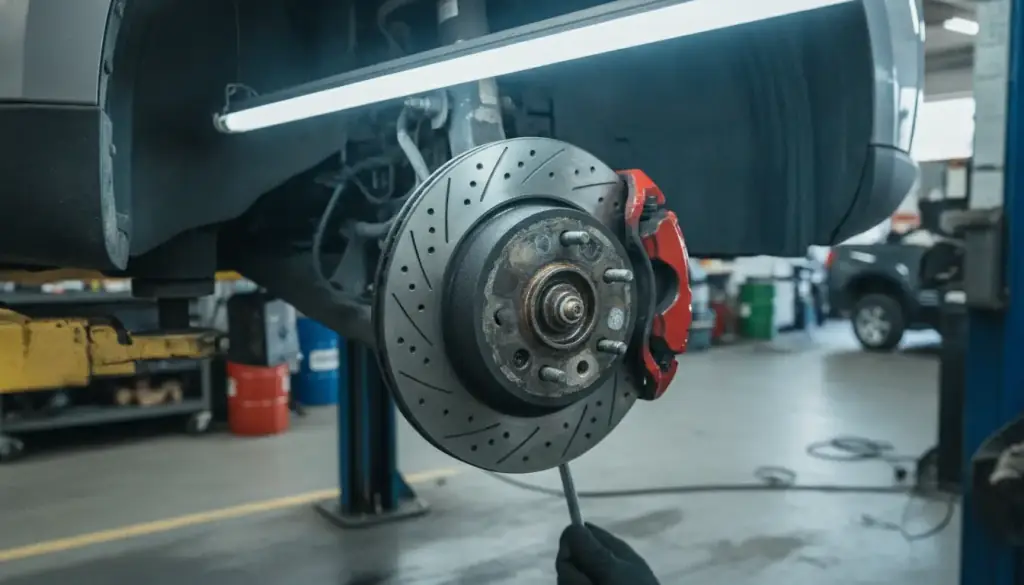
Brake rotor with a red caliper mounted on a vehicle lift
Pads, rotors, calipers, hoses and fluid, all looked at
A brake inspection here is in depth because a pad measurement alone tells you very little. We look at the pads and how evenly they have worn, the rotor faces and edges, the calipers and whether they slide freely, the rubber hoses for cracks and swelling, and the condition of the fluid in the system.
Uneven pad wear is a clue worth following. It can mean a caliper that is not releasing, and replacing pads without freeing the caliper just sends the same problem home with you. The same goes for a soft pedal: topping off fluid hides a leak, it does not fix one.
Our technicians are ASE-certified, and the shop is an AAA-Approved Automotive Center. We work on any make or model, and we handle warranty and insurance work when your repair calls for it.
Chapter 03
No hidden costs, and a written estimate first
Brake work is where drivers worry most about the bill growing in the back room. Our answer is plain: no hidden costs. You get a same-day estimate that names what needs doing, and we will match any written price you bring in.
There are no hidden costs: the same-day estimate is the plan, and the shop will match any written price. That is how a family-owned shop serving the Fox Valley since 1958 keeps customers coming back.
Same-day estimates on any make or model, and we will match any written price.
Service writer margin notes
What your brakes are saying
Sound and feel are the first diagnosis. Here is how those signs usually read in the bay, before a wheel comes off. Treat it as a guide to what to tell us, since only the inspection confirms the cause.
- A thin, high squeal as you roll to a stop
- Most pads carry a small steel wear tab that drags on the rotor once the friction material runs low. It is a warning, and it is cheapest to answer early.
- A low grinding you can feel through the pedal
- Friction material is gone and metal is meeting metal. The rotors usually need attention along with the pads, and the longer it runs the more it grows.
- A pedal that sinks or feels soft
- Air or moisture in the fluid, or a hose or caliper that is seeping. The pedal is telling you the hydraulics are not holding pressure the way they should.
- A shudder through the wheel on the highway
- Rotor thickness that has gone uneven. The pads chatter across it, and you feel that in your hands and in the pedal.
- A pull to one side when you brake
- One side is working harder than the other, often a sticking caliper or a tired hose. It also eats pads on that side first.
Brakes and the front end share a lot of the same road. If the car also wanders or clunks, read about steering and suspension work.