Brake Warning Signs and What They Usually Mean
Your brakes almost always tell you something is wrong before they fail, if you know what you're hearing and feeling.
October 14, 2026 · 4 min read
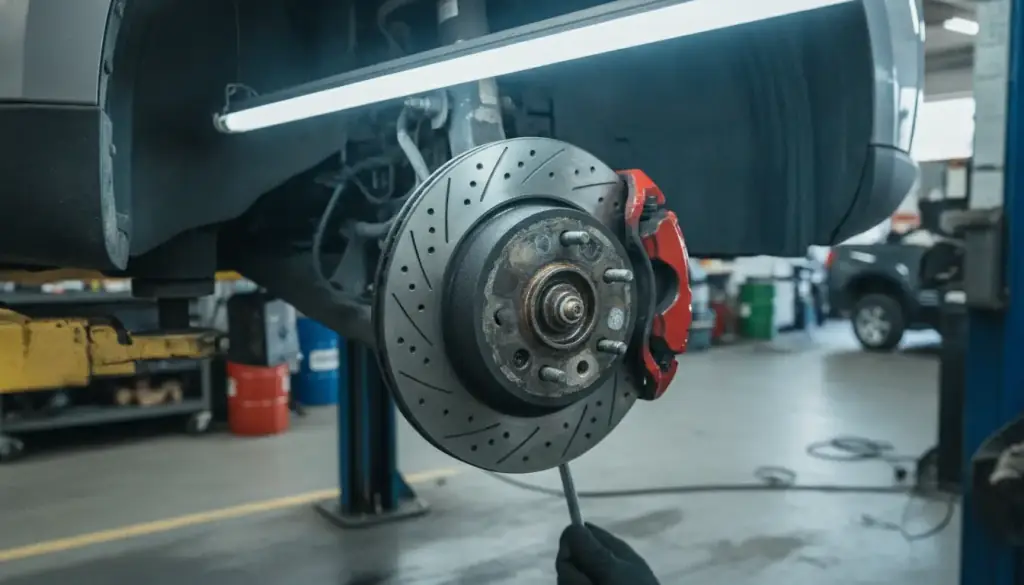
Brakes are one of the few parts of a car that give you plenty of warning. They're built to wear out in steps, and each step comes with a sound, a feel or a behavior you can notice from the driver's seat. The trouble is that people get used to a car. A slightly longer stop becomes normal, a squeal becomes background noise, and the warning gets filed under quirks. Here's how to read the signs, and what they usually mean when you bring the car in.
The squeal
A high, thin squeal when you press the pedal is the most common complaint, and it's often the brakes doing exactly what they were designed to do. Many brake pads carry a small metal tab that touches the rotor once the friction material wears down, and it squeaks to tell you the pads are getting low. That's your early notice. It's the cheapest moment to act, because the rotors are usually still in good shape.
Not every squeal means worn pads. Moisture and light surface rust after a damp night can make brakes noisy for the first stop or two. Glazed pads and dust caught in the caliper can do it too. The way to tell the difference is simple: if it goes away after a few stops, it's likely the weather. If it's there every day, get it checked.
The grind
A low, rough grinding noise is a different animal. It usually means the pad material is gone and metal is meeting metal. At that point the pads are no longer protecting the rotors, and rotors can score or wear past the point where they can be reused. A grind also tends to come with a rough feel through the pedal.
If you hear grinding, don't wait for a convenient weekend. Drive gently, avoid long downhill stretches and hard stops, and call the shop. Catching it early often keeps the repair to pads, while waiting can add rotors and sometimes calipers to the list.
A spongy or sinking pedal
A pedal that feels soft, travels farther than it used to, or slowly sinks toward the floor while you hold it points to the hydraulic side of the system. Brakes work by pushing fluid through lines and hoses to the calipers at each wheel. Air in the lines, old fluid, a leaking hose or a failing master cylinder can all make the pedal feel mushy.
This one deserves more urgency than a squeal. A pedal that changes feel is the car telling you the system isn't holding pressure the way it should. Brake fluid also absorbs moisture over time, which is one reason fluid gets checked during an in-depth brake inspection and not just the pads.
Longer stops and pulling to one side
If you're leaving more room than you used to and still feel like the car takes a while to settle, you're seeing diminished stopping power. Worn pads, glazed rotors, a sticking caliper or tired fluid can each play a part, and it's hard to guess which from the driver's seat. A technician can put the car on a lift, pull the wheels and look at every part in the chain.
Pulling is a related sign. If the car drifts left or right when you brake, one side is doing more work than the other. A caliper that's hanging up, a collapsed hose or uneven pad wear can cause it. It can also be a tire or suspension issue wearing a brake costume, which is why a proper inspection looks at more than the pads.
Shaking, pulsing and warning lights
- A steering wheel that shakes under braking often points to rotors that have worn unevenly or warped from heat.
- A pulsing pedal can come from the same rotor issue, or in some cars from the anti-lock system doing its job on slick roads, which is normal.
- A brake warning light that stays on deserves a check. It can mean low fluid, a worn pad sensor or a problem in the system itself.
- A burning smell after hard driving can mean overheated brakes. If it shows up on an ordinary drive, a caliper may be dragging.
- Fluid on the inside of a wheel or a puddle under the car is a leak until proven otherwise.
What a good brake inspection covers
Brake work at Zentner's covers pads, rotors, calipers, hoses and fluid, with an in-depth inspection so you know what's wearing and what's fine. That matters, because the point of looking isn't to find a reason to replace parts. It's to match the repair to what's actually worn. The shop's brake page promises no hidden costs, and the way to hold anyone to that is to ask them to show you the parts and explain what they see.
A brake inspection also fits neatly into a tire rotation, because the wheels are already off. If you're on a regular maintenance rhythm, your brakes get a look every visit. If you're not, a noise or a feel change is a good reason to start one.
If something sounds or feels different, don't talk yourself out of it. Call Zentner's Auto Service at (920) 734-6109 or stop by 4510 W Greenville Dr in Appleton, Monday through Friday, 7:30 AM to 4:30 PM. The shop gives same-day estimates and works on any make or model.
Zentner's Auto Service, (920) 734-6109
Call (920) 734-6109More articles
A Maintenance Rhythm That Fits Wisconsin Driving
Cold starts, short trips and road salt wear a car differently here, so your service schedule should account for all three.
Potholes, Pull and Uneven Tread: When to Get an Alignment
Camber, caster and toe sound technical, but each one explains something you can feel from the driver's seat.