Potholes, Pull and Uneven Tread: When to Get an Alignment
Camber, caster and toe sound technical, but each one explains something you can feel from the driver's seat.
October 14, 2026 · 4 min read
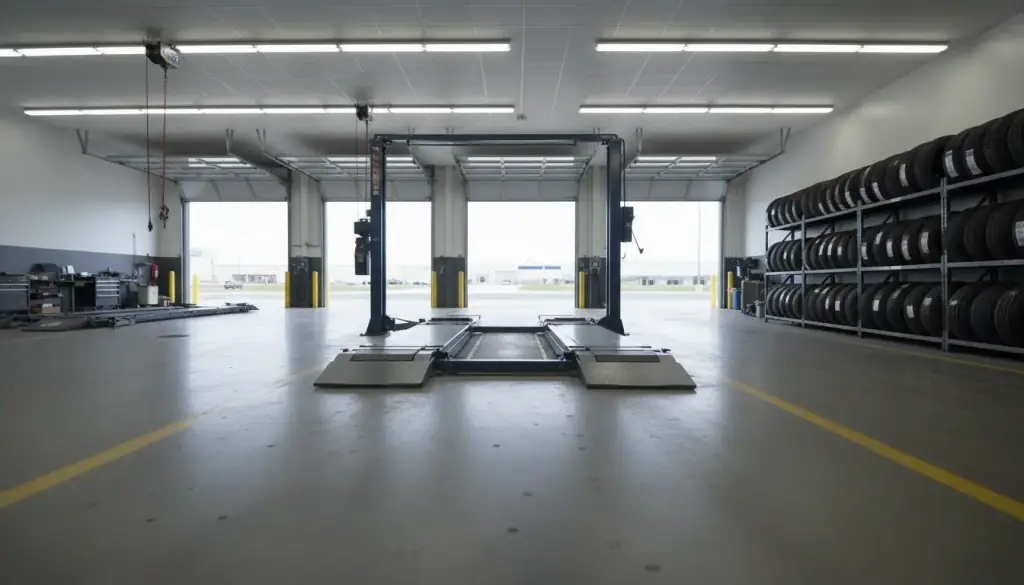
Every spring the Fox Valley gets the same gift: potholes that show up overnight, usually right after a freeze and thaw cycle. You hit one, the whole car thumps, and you tell yourself it was fine. Sometimes it is. Sometimes that one hit nudges a wheel out of position, and you spend the next ten thousand miles wearing out a tire unevenly without noticing. An alignment is how you find out which one happened.
What an alignment actually does
An alignment doesn't touch your tires. It adjusts the angles of the wheels so they point where the car's designers intended, and so all four sit properly relative to the road and to each other. Done right, the car tracks straight, the steering wheel sits centered, and the tires wear evenly across their width.
Zentner's recently invested in a state-of-the-art alignment system, and it's used to set camber, caster and toe back to factory specification on cars, SUVs and light trucks. Those three words are the heart of the job, so it helps to know what each one means.
Camber, caster and toe in plain words
- Camber is the tilt of the wheel when you look at the car from the front. Tilted in at the top is negative camber, tilted out is positive. Too much either way wears one edge of the tire faster than the other.
- Caster is the angle of the steering pivot as seen from the side. It's what makes the steering wheel return to center after a turn and helps the car hold a straight line. A caster problem usually shows up as pulling or a wheel that doesn't settle.
- Toe is the direction the tires point compared with each other, like the way your feet point when you stand. Toe-in means the fronts point slightly toward each other, toe-out means they point apart. Even a small error drags the tire sideways as it rolls and chews up tread.
You don't need to remember the geometry. What you need to remember is that all three have to be right at once, and that a bent or worn part anywhere in the front end can pull them out of range.
Signs it's time
The easiest sign is a steering wheel that's off center when you're driving straight. The next is a car that drifts to one side on a flat road, so you find yourself holding a little pressure on the wheel. Some pull is normal on a crowned road, but if the car wanders on a flat stretch, something's off.
Tires will tell the story too. Look at the tread. If the inside or outside edge is worn smooth while the center still has depth, that's a camber or toe issue. If the tread feels feathered, like saw teeth when you run your hand across it, that's often toe. Squealing tires on ordinary turns, a car that feels loose at highway speed, and new tires that seem to wear fast are all worth checking.
Potholes, curbs and the first hard hit
A single hard hit can bend a tie rod, knock a control arm or shift a strut, any of which changes your alignment. A curb strike on a tight turn can do the same. After a big impact, watch for a new pull, a vibration, a steering wheel that sits crooked, or a thump that wasn't there before.
If you've had a hit that felt serious, don't just align the car. Have the front end inspected first. Zentner's does steering and suspension work, including tie rod ends, ball joints, springs, shocks and struts, and an alignment can't hold if a worn or bent part is loose underneath it. Setting angles on a damaged suspension is money spent on a number that won't last.
When to book without waiting for a symptom
There are moments when an alignment makes sense even if the car feels fine. New tires are the big one. You've just put money into tread, so you want it to wear evenly from day one. Replacing steering or suspension parts is another, since those parts directly set the angles. And if you've gone a long time without one, a yearly check is a reasonable habit for a car that spends its days on rough pavement.
Alignment also pairs well with a tire rotation and a brake inspection, because the wheels are already coming off and the car is already on a lift. Ask the service writer to look at tire wear patterns while it's there, since the pattern is a record of how the car has been behaving.
What to tell the shop
When you call, describe what you notice and when. Does the pull happen only while braking? Only on the highway? Did it start after a specific hit? That detail helps separate an alignment problem from a tire defect, a brake issue or a bad wheel bearing.
Zentner's Auto Service is at 4510 W Greenville Dr in Appleton, open Monday through Friday, 7:30 AM to 4:30 PM. Call (920) 734-6109 and the shop will give you a same-day estimate and tell you honestly if an alignment is the right fix or something else needs attention first.
Zentner's Auto Service, (920) 734-6109
Call (920) 734-6109More articles
A Maintenance Rhythm That Fits Wisconsin Driving
Cold starts, short trips and road salt wear a car differently here, so your service schedule should account for all three.
Brake Warning Signs and What They Usually Mean
Your brakes almost always tell you something is wrong before they fail, if you know what you're hearing and feeling.