Choosing Tires for Fox Valley Seasons
The right tire depends on how you drive, where you park and how much of the winter you spend on unplowed roads.
October 14, 2026 · 4 min read
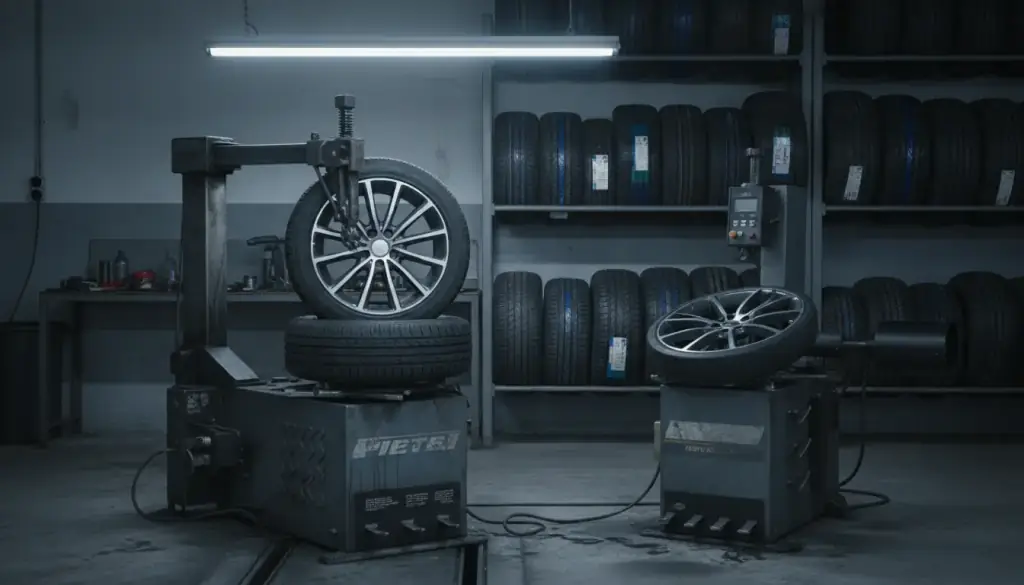
Tires are the only part of your car that actually touches the road, and in the Fox Valley that road changes four times a year. You get dry summer pavement, wet fall leaves, packed snow, slush, ice and then the spring mess. No single tire is perfect for all of it, so the real question is which compromises you're comfortable with. Here's how to think it through before you buy.
All-season versus snow and mud tires
All-season tires are built to be acceptable in most conditions. They use a tread and rubber blend that works across a wide range of temperatures, which is why most cars come with them from the factory. For a driver who mostly stays on plowed roads, works in town and can wait for the plow on a bad morning, all-seasons are a sensible choice.
Snow and mud tires go the other direction. They have deeper, more aggressive tread with wide channels that bite into loose snow and clear slush. Winter-focused rubber also tends to stay more flexible when it's cold, which helps grip on cold pavement even when there's no snow. The trade-off is that they're often noisier and wear faster on dry roads, so many drivers run them only in the cold months.
Match the tire to the driving
- Mostly in-town commuting on plowed roads: a quality all-season is usually enough.
- Long rural commutes, hills, or early starts before the plow: consider a dedicated winter or snow tire.
- Trucks and SUVs that tow, haul or head to the cabin: look at tread built for load and loose surfaces.
- Work vehicles that run in all weather: durability and consistent wear matter more than quiet.
- A second set of wheels: a separate winter set on its own wheels makes seasonal swaps quick and keeps both sets from aging faster than they need to.
If you're not sure which group you fall into, tell the service writer how far you drive, what roads you take, and when you leave in the morning. Those details usually settle the question faster than a brand name does.
The brands on the shelf
Zentner's carries every major tire brand. That includes Michelin, Cooper, BFGoodrich, Bridgestone, Continental and Goodyear, along with Carlisle, Towmax, Roadmaster and Firestorm. The range also covers heavy-truck, trailer, snow and mud, race and bag tires, so the shop isn't limited to passenger cars.
Brand matters less than people think, and fit matters more. A tire that's right for your vehicle, your load and your driving beats a famous name that doesn't match. Ask what each option is built for, and how it compares to what you have now. The shop will also match any written price, so if you've collected a quote elsewhere, bring it along.
Mounting, balancing and rotating
Buying the tire is half the job. Mounting puts it onto the wheel, balancing adds small weights so the wheel spins smoothly, and both steps affect how the car feels at speed. A tire that's out of balance shows up as a vibration in the steering wheel or the seat, usually at highway speed. It also wears unevenly, which shortens the life of a good tire.
Rotating is the habit that makes the whole set last. Front tires on most cars take more of the steering and braking load, so they wear differently from the rears. Moving them around on a regular schedule evens that out. It's easy to fold into a normal maintenance visit, since the shop is already checking brakes while the wheels are off.
Pressure, tread and the little checks
Air pressure drops as the weather gets colder, and a tire that's low wears faster and handles worse. Check it monthly and after any big temperature swing, using the number on the label inside your driver's door, not the number printed on the tire itself. Look at the tread too. If the wear bars are level with the rubber around them, the tire is done, and in winter it's done sooner than that, because shallow tread can't clear slush.
Walk around the car once in a while and look for bulges, cracks in the sidewall, nails and uneven wear. Those are cheap to catch and expensive to ignore. If one tire is much more worn than the others, that's a clue for the alignment bay, not just the tire counter.
Wait time and the waiting room
Tire work goes quicker than most people expect, and the shop has complimentary Wi-Fi, coffee and soft drinks while you wait. Same-day estimates mean you can find out the options and the numbers before you commit. And the shop handles financing for larger jobs, so if a full set is a stretch, ask about terms when you call.
Stop by Zentner's Auto Service at 4510 W Greenville Dr in Appleton, Monday through Friday, 7:30 AM to 4:30 PM, or call (920) 734-6109. Tell the service writer how you drive and they'll help you pick a tire that fits the season you're about to have.
Zentner's Auto Service, (920) 734-6109
Call (920) 734-6109More articles
A Maintenance Rhythm That Fits Wisconsin Driving
Cold starts, short trips and road salt wear a car differently here, so your service schedule should account for all three.
Brake Warning Signs and What They Usually Mean
Your brakes almost always tell you something is wrong before they fail, if you know what you're hearing and feeling.